The "Baking Soda Trick" for Weight Loss: What's Really Behind the Viral Morning Ritual Everyone's Trying?
If you've tried every diet and the weight still won't move, you're not alone — and it may not be your fault. The trending "baking soda trick" — a simple morning drink — is spreading as a natural way to support GLP-1 for exactly that frustration. Here's what it is, the biology behind why your body fights weight loss — the hunger hormones GLP-1, GIP and the DPP-4 enzyme — and what the evidence really shows.
Key takeaways
- The "baking soda trick" is a trending morning ritual — a glass of baking soda water — promoted as a natural way to support GLP-1.
- GLP-1 and GIP are the gut hormones that control fullness; the DPP-4 enzyme switches them off.
- Prescription injections work by imitating GLP-1 — a natural alternative can support the same pathway, not replace the drug.
- Berberine (AMPK), ginger and sodium bicarbonate are the most-cited natural options; evidence ranges from promising to thin.
You've cut the calories. You've walked the miles, tried the fasting, the shakes, the "just eat less." And still — the scale won't move, the belly fat won't go, and the hunger never quits. If that's you, here's something worth hearing: the problem may not be your willpower at all.
That frustration is exactly why the baking soda trick is spreading so fast. Millions of people, tired of expensive injections and crash diets, are searching for a natural way to support GLP-1 — a cheap morning drink they can make at home. Does it actually work? To judge it honestly, you first have to understand why your body has been fighting you: the GLP-1 metabolism pathway.
Is this you?
If any of this sounds familiar, you're exactly who's driving this trend:
- You've tried diet after diet and the scale barely moves
- Stubborn belly fat and hunger that never seems to quit
- You want to lose weight naturally — without needles or a prescription
- You're curious about GLP-1 but want a gentler, at-home approach
What is the "baking soda trick"?
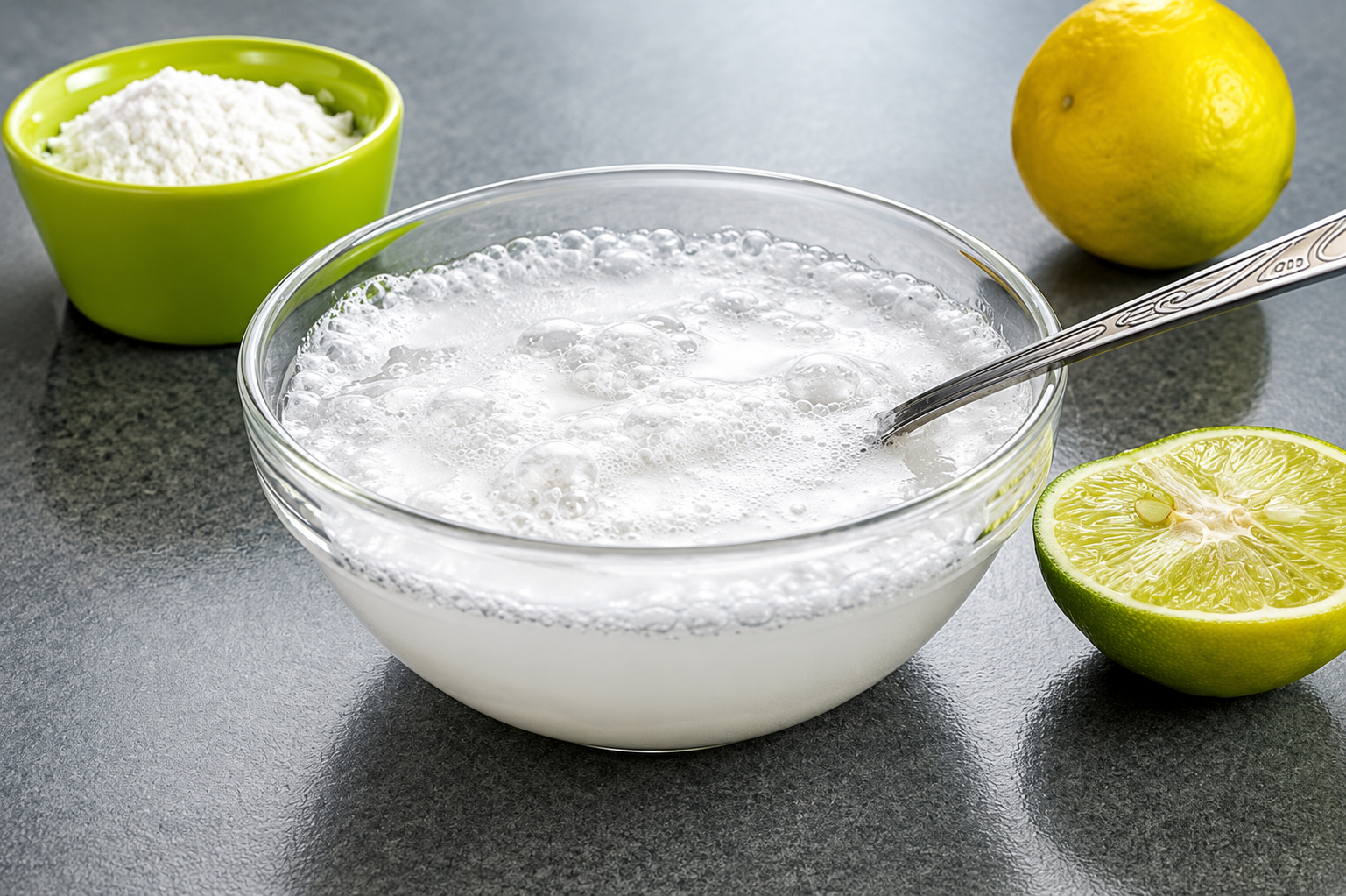
The baking soda trick is simple: a glass of water with a small amount of baking soda (sodium bicarbonate) — often with lemon or ginger — taken first thing in the morning. Supporters say this baking soda water "wakes up" a sluggish metabolism and quiets appetite for the day. To understand why anyone believes that could work, look at the hormones the trend is really about.
Why your body fights weight loss: GLP-1, GIP and the DPP-4 enzyme
Here's why willpower keeps losing. When you eat, it isn't your stomach that tells your brain to stop — it's two gut hormones. GLP-1 and GIP signal fullness, slow digestion and steady blood sugar. The catch: your body switches them off almost as fast, using an enzyme called DPP-4 that breaks GLP-1 down within minutes. When DPP-4 clears GLP-1 too quickly, that "I'm full" feeling fades and the hunger comes roaring back — no matter how disciplined you are. That single mechanism, GLP-1 up, DPP-4 down, is why so many people feel like their own body is working against them.
GLP-1 and GIP tell your brain you're full. The DPP-4 enzyme shuts that signal off. Prescription weight-loss injections work by imitating GLP-1 so the signal lasts far longer — which raises the obvious question, and the whole reason the baking soda trick took off: can food and simple habits support the same pathway without a needle?
Supporting GLP-1 naturally — and the AMPK switch
These GLP-1 injections (semaglutide is one) are receptor agonists: they mimic your own GLP-1 so fullness lasts far longer than nature allows. They're effective — but they're prescriptions with real costs, possible side effects, and a well-documented catch: appetite (and often the weight) tends to return once people stop. That's exactly why interest in a natural way to support GLP-1 has exploded.
The honest version: no food or supplement replicates a drug. A "natural alternative" means gently supporting the same pathways — GLP-1 and AMPK, the enzyme that decides whether your cells burn stored energy or store it. A sluggish metabolism is, in part, an AMPK that isn't switched on often enough.
The natural methods people actually use
Most routines are built around three studied ingredients, each tied to the mechanism above:
Sodium bicarbonate (baking soda) — the star of the baking soda trick, theorized to buffer gut pH and support the cells that produce GLP-1 and GIP; real chemistry, but thin evidence for weight loss specifically. Ginger (gingerol) — the common add-on to the ritual; small studies on digestion, blood sugar and a mild metabolic effect; promising, not proof. Berberine — the most human research of the three, including direct activation of AMPK (hence its "nature's GLP-1" nickname), though studies are often small.
"Studied in a lab" is not the same as "proven to help you lose weight." Supporting a pathway is not replacing a medication — and "natural" doesn't automatically mean effective, or risk-free.
So — do they actually work?
The mechanism is real: GLP-1, GIP, DPP-4 and AMPK genuinely govern hunger and fat metabolism, and the right habits and compounds can nudge them in the right direction. The reliable levers are unglamorous but effective — enough protein and fiber, resistance training, daily movement, good sleep and lower stress all support GLP-1 and AMPK naturally. What no natural method can honestly claim is to match a prescription drug or guarantee a number on the scale — so talk to a qualified professional before adding any supplement, especially if you take medication or manage a condition like thyroid issues, pre-diabetes or high cholesterol.
Just a simple morning routine — cheap, no fuss, and something you can start tomorrow. People keep asking for the specifics of the trending ritual — the ingredients, the amounts, the timing — so we put the full, no-hype walkthrough in one place.
See the baking soda trick →